
Originally Posted On: https://www.safetypluswholesale.com/blogs/news/5-places-every-construction-site-needs-a-10-lb-abc-fire-extinguisher-installed
Top Picks at a Glance
-
Electrical panel & generator station — closest extinguisher to your highest-risk power source
-
Fuel and flammable storage — placed within 50 feet, never blocked by pallets
-
Site trailer entryway — grab-and-go access before anyone steps outside
-
Hoists and elevated platforms — heavy-duty brackets rated for vibration and height
-
Every truck bed and cab — vehicle mounting bracket keeps it locked in during transport
One dropped welding spark near a fuel can can turn a job site into a five-alarm mess in under sixty seconds. That's not a scare tactic — it's just how fast Class B fires move once they get going. Most site inspectors — insurance auditors won't sign off on a project without proof that a 10 lb ABC fire extinguisher is mounted within reach of every major hazard zone, and for good reason.
A construction site isn't one hazard. It's five or six of them stacked on top of each other — live wires, diesel, lumber, propane heaters, idling trucks. A single extinguisher by the trailer door doesn't cut it. Where you place each unit matters almost as much as which one you buy, and the placement rules aren't guesswork. They come straight from fire code, and getting them wrong is the kind of thing that shows up on a citation report.
Why a 10 lb ABC Fire Extinguisher Is the Job Site Standard
Picture a framer running a saw next to a stack of lumber, an electrician splicing wire in the panel room, and a welder throwing sparks near a fuel can — all on the same site, same afternoon. That's why inspectors keep coming back to one answer: a 10 lb ABC fire extinguisher at every one of those stations. It handles wood and paper, flammable liquids, and live electrical gear without swapping units.
What ABC Rating and 10 lb Capacity Actually Mean
The ABC rating means the dry chemical agent inside works on Class A, B, and C fires — that's your combustibles, your fuels, and your energized equipment. Ten pounds gives crews roughly 12-18 seconds of usable agent, which is enough for a real first response before the fire department arrives.
Discharge Time and Coverage Area on an Active Site
Mounted correctly with a 10 lb fire extinguisher bracket, coverage typically runs 3,000 square feet under NFPA 10 guidance for ordinary hazard occupancies. Don't stretch that spacing on an active site.
1. The Temporary Electrical Panel and Generator Station
Electrical panels and generators start more site fires than almost anything else on a job. Put a 10 lb ABC fire extinguisher within 30 feet of every temporary panel, transformer, or fuel-powered generator — no exceptions. The ABC rating handles electrical faults and any fuel that might be sitting nearby, which is exactly the mixed-risk zone these stations create.
Wall Mount vs. Vehicle Mounting Bracket Options
If the panel's on a fixed structure, a wall mount abc fire extinguisher setup keeps it visible and off the ground, away from mud and debris. Generators that get towed between areas need a different approach — mount the unit to the trailer or truck bed instead. Before you place a bulk order, run through the specifications to verify before ordering a 5 lb ABC fire extinguisher — pressure gauge type, hardware compatibility, and discharge time all matter more once you're buying by the pallet, not the piece.
2. Fuel and Flammable Storage Areas Near Equipment Staging
Where's the closest extinguisher to your diesel tanks right now? If you can't answer that in five seconds, you've got a gap. Fuel drums, propane cylinders, and lubricant storage near equipment staging areas are where small sparks turn into real fires fast — grease-soaked rags, hot exhaust manifolds, and pressurized fuel lines don't leave much room for error.
A 10 lb ABC fire extinguisher handles Class B liquid fires well, but for larger staging yards with bigger fuel volumes, some site managers step up to a 20 lb ABC fire extinguisher instead. Either way, mount it on sturdy hardware rated for outdoor vehicle traffic and dust exposure.
Procurement teams sourcing bulk units for multiple staging zones should review these ABC fire extinguisher questions for procurement teams before finalizing quantities and placement specs.
3. The Site Trailer and Job Office Entryway
OSHA inspectors cite missing or blocked extinguishers in roughly 1 out of every 5 site walkthroughs — and the trailer entryway is where inspectors look first. It's the spot workers hit paperwork, grab radios, and clock in, which means foot traffic is heavy, and fire risk from space heaters, coffee makers, and overloaded power strips runs high.
A commercial ABC fire extinguisher mounted right inside the door covers electrical and paper-fueled fires without forcing anyone to guess which unit to grab. Skip the floor-standing units here — they get kicked over, buried under supplies, or moved out of reach within a week.
The better setup: a 10 lb ABC fire extinguisher with wall hook at 3-5 feet off the floor, clear of clipboards and coat hooks. It's rechargeable, holds pressure between inspections, and gives the whole crew one obvious, unobstructed grab point during those first critical seconds of discharge.
4. Material Hoists, Scaffolding Platforms, and Elevated Work Zones
Most crews assume any wall bracket works at height. That's wrong, and it's a mistake that costs equipment during a storm gust or a hoist vibration. Elevated platforms need hardware rated for movement, not just weight.
Bracket Weight Class: Matching Hardware to Mounting Surface
A 10 lb ABC fire extinguisher weighs more than the compact units crews keep in trucks, so scaffolding brackets need a heavier-duty rating than what you'd use on a smooth interior wall. On tube-and-clamp systems, vibration from hoist motors loosens standard hardware fast — inspect brackets weekly. For lighter platforms or when weight matters more than knockdown power, some supervisors swap to a 5 lb ABC fire extinguisher instead, since it mounts easier on tighter scaffold rails. Either way, match the bracket's load rating to the extinguisher's actual weight, not an estimate. Check pins and straps monthly; corrosion at height moves faster near open-air platforms exposed to rain and temperature swings.
5. Every Vehicle, Truck Bed, and Heavy Equipment Cab
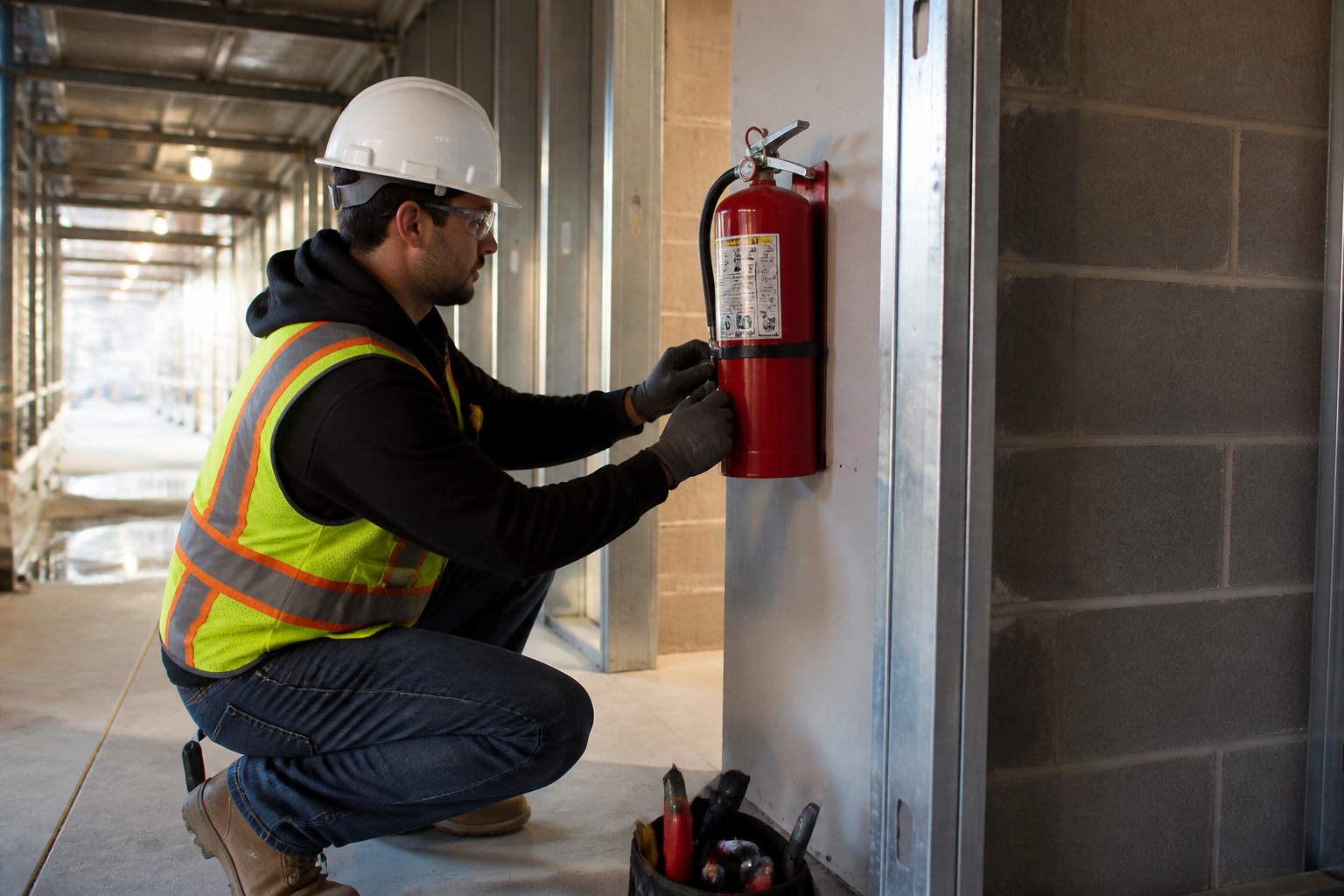
A welder's truck rolls onto site with sparks still landing near a fuel can in the bed — and no extinguisher within reach. That's how a five-minute fix turns into a burned-out F-250. Every truck, loader, excavator, and man-lift needs its own 10 lb ABC fire extinguisher secured with a vehicle mounting bracket, not tossed loose on the floorboard where it becomes a projectile in a rollover. Cab-mounted units should sit within the operator's reach, rated for engine fires, fuel spills, and electrical shorts alike.
Hydrostatic Testing, Recharge, and Certification Tag Requirements
Vehicle units take a beating from vibration and temperature swings, so hydrostatic testing every 5 years (12 for certain dry chemical models) isn't optional — it's code. After any discharge, get the cylinder recharged and re-tagged before it goes back on the truck. If you're unsure whether your current unit qualifies as an ABC dry chemical fire extinguisher, check the label — mixed fleets often hide expired tags.
Choosing and Buying the Right 10 lb ABC Fire Extinguisher for Bulk Site Orders
Buying extinguishers one at a time is a rookie mistake for any job site procurement plan. When you're outfitting five locations across a build, you need consistent hardware, not a mixed bag of brands and cartridge types picked up piecemeal from a hardware store run.
Check the hydrostatic test date before ordering — it's stamped right on the cylinder — a unit close to its retest window is a bad buy for a multi-year project. Confirm the type rating matches your risk zones (wood, electrical panels, fuel), and don't skip the mounting hardware. A bare cylinder without a bracket just sits on the ground until someone trips over it.
For procurement teams comparing a 10 lb ABC fire extinguisher price across vendors, look past the sticker number. Factor in included brackets, tagging support, and whether the supplier ships tracked and fast enough to keep inspections on schedule.
Five spots, one shared standard. Every panel, fuel stage, trailer, hoist platform, and cab on an active job needs its own 10 lb ABC fire extinguisher within reach — not a shared unit two trailers down. That's the part inspectors check first, and it's the part crews actually use when something goes wrong fast.
Bracket choice matters more than most procurement lists admit. A stand duty hook on a vibrating hoist platform is asking for trouble, while a vehicle bracket on a static wall wastes money. Match the hardware to the surface, then tag and track recharge dates so nothing on site quietly falls out of code.
Safety Plus Wholesale builds bulk orders around exactly this logic — ABC units, the right brackets, stands, certification tags in one shipment, out the door in 2-3 days with tracking the whole way. For Division 10 specs or multi-site rollouts, use the Wholesale Quote Builder or call 1-855-747-2334 and talk to a real person who'll spec the order with you, not just take it.
Safety Plus Wholesale
119 Hausman St 2nd floor
Brooklyn, NY 11222
(855) 747-2334
https://www.safetypluswholesale.com


