Key Takeaways
- Royal Mail has introduced charges for thermal labels, ending their free service and adding new costs for e-commerce businesses.
- No bulk discounts are available, making third-party suppliers increasingly attractive for businesses shipping high volumes.
- Compatible alternatives from packaging specialists can provide significant cost savings through volume pricing and multi-roll packs
- Understanding thermal label specifications and printer compatibility ensures seamless transitions to cost-effective supplier alternatives.
The world of shipping supplies has shifted in the UK, with Royal Mail bringing in sweeping new changes to how businesses access thermal labels. For the thousands of e-commerce sellers who have relied on complimentary label collection from Customer Service Points, these potential changes represent both a challenge and an opportunity to reassess their packaging supply chains.
Current Free Label Policy May Face Future Changes
Royal Mail’s free thermal label programme has been a cornerstone of support for UK businesses since the introduction of Click & Drop services. Small-to-medium e-commerce sellers have grown accustomed to collecting standard 4×6 inch thermal label rolls at no cost from local Customer Service Points, treating these supplies as part of their routine postal operations.
However, those days are gone. It’s a trend seen worldwide; postal carriers are transitioning consumable supplies from complimentary services to revenue-generating product lines. The implementation of charges in the UK mirrors similar changes across international logistics networks, where rising material costs and operational pressures have prompted carriers to restructure their business account offerings.
That’s exactly why forward-thinking e-commerce businesses are evaluating alternative thermal label sources to maintain cost efficiency.
Understanding Royal Mail’s Thermal Label Specifications
The transition to paid thermal labels requires businesses to understand the technical requirements that ensure seamless compatibility with existing workflows and postal scanning systems.
Standard 4×6 Inch (102x152mm) Requirements
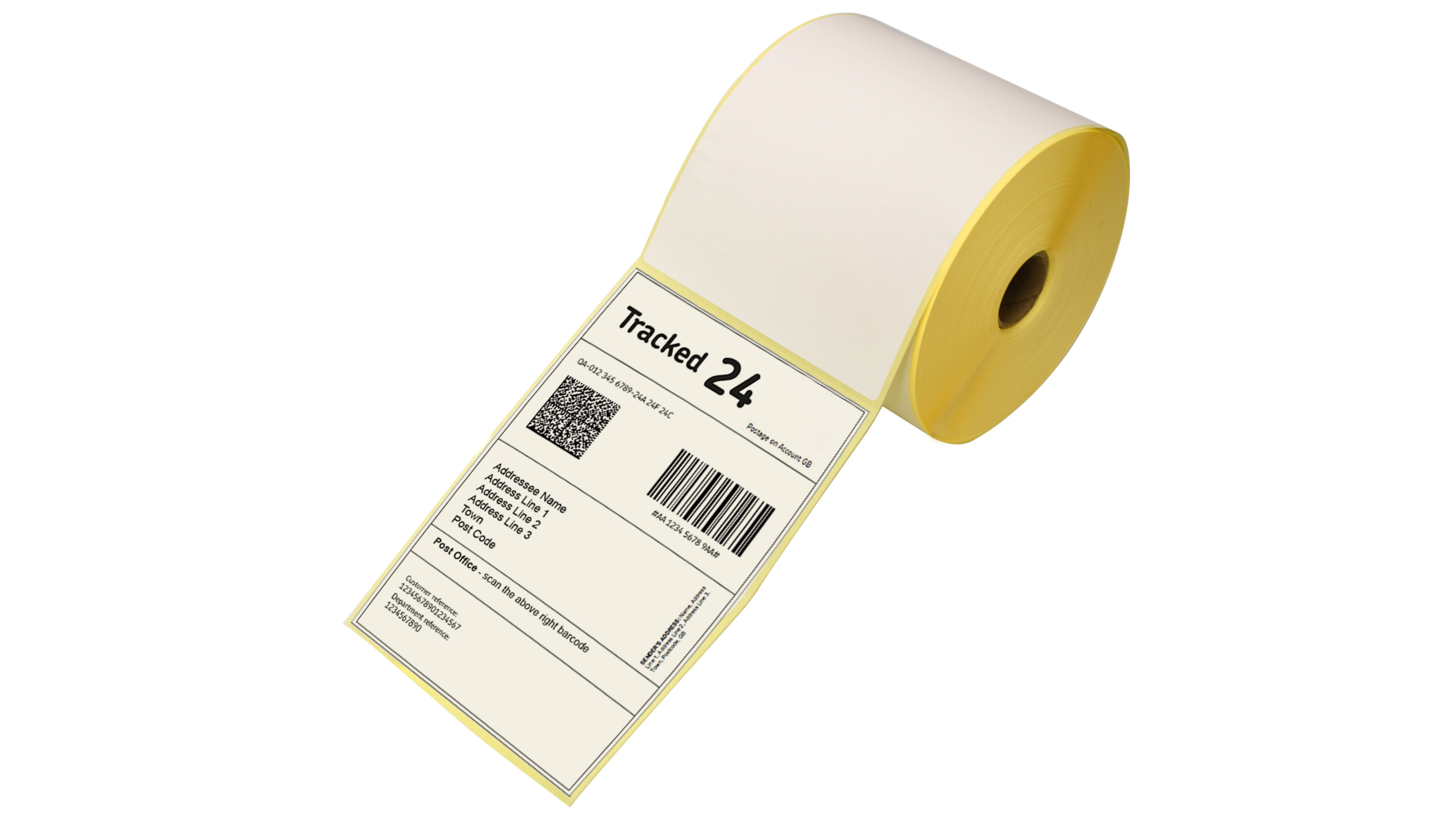
Royal Mail Click & Drop software specifically requires 102mm x 152mm (4×6 inch) thermal labels to ensure proper barcode resolution and tracking information display. This standardised sizing guarantees that 2D barcodes print at the correct dimensions for postal scanners throughout the Royal Mail network. The specification also ensures universal compatibility across UK carriers, allowing businesses to use the same label stock for multiple shipping services.
Each standard roll contains approximately 500 labels, providing sufficient stock for most small-to-medium shipping operations. An important note: consistent sizing eliminates compatibility concerns when switching between suppliers, as any 102x152mm direct thermal label will function identically in supported printers and software systems.
Direct Thermal vs Thermal Transfer Technology
Direct thermal printing has become the industry standard for shipping labels because it eliminates consumable costs beyond the labels themselves. This technology uses heat-sensitive paper that darkens when heated, creating text and barcodes without requiring ink, toner, or ribbons. The result is faster printing speeds, lower operational complexity, and reduced ongoing supply costs compared to traditional printing methods.
Thermal transfer technology, whilst more durable for long-term storage, requires additional ribbon supplies and is typically reserved for permanent labelling applications rather than shipping. For e-commerce operations where labels are applied and shipped within days, direct thermal provides the optimal balance of print quality, speed, and cost-effectiveness.
Printer Compatibility Across Popular Models
Most desktop thermal printers operate as ‘media agnostic’ devices, meaning they function seamlessly with compatible labels regardless of manufacturer. Popular models all support standard 4×6 inch direct thermal labels without requiring proprietary supplies.
This compatibility ensures businesses can source labels from any qualified supplier without hardware modifications or software adjustments. The printer simply applies controlled heat to create the required text and barcode patterns, making the label source transparent to the printing process.
Cost Implications of Potential Charging Models
The financial impact of thermal label charges varies dramatically based on shipping volume, creating different cost pressures across business sizes and operational models.
Per-Label Cost Impact for Different Shipping Volumes
For low-volume shippers processing 10 parcels weekly, annual label costs total around £5-6, representing minimal impact on operational budgets. However, businesses shipping 100 parcels weekly face annual costs of £47-52, whilst high-volume operations processing 500+ parcels weekly will incur £240+ in annual label expenses.
These calculations assume consistent shipping volumes throughout the year, though seasonal e-commerce businesses may experience concentrated cost impacts during peak periods. And a lack of volume discounts in carrier pricing structures means per-label costs stay constant regardless of order quantity – eliminating traditional economies of scale.
Annual Budget Projections for E-commerce Businesses
Medium-sized e-commerce operations shipping 2,600 parcels annually now require approximately 5-6 label rolls, translating to £24-28 in new annual costs. Whilst manageable individually, this expense compounds alongside rising postage rates, packaging costs, and general operational inflation to create cumulative pressure on profit margins.
Larger operations face more substantial impacts, with businesses processing 5,200+ annual shipments requiring 10-11 rolls costing £47-52 yearly. For marketplace sellers operating on thin margins, these additional costs necessitate either price increases or margin compression, both potentially impacting competitiveness.
Administrative Burden of Label Inventory Management
Beyond direct costs, the transition from free on-demand labels to purchased inventory creates new administrative responsibilities for small business owners. Previously, label collection formed part of routine postal visits, with no inventory tracking or reorder management required.
The new model requires businesses to monitor label stock levels, place orders with sufficient lead time, and manage storage space for bulk purchases. For sole traders and small teams already managing complex e-commerce operations, this additional inventory management represents a hidden cost in time and mental bandwidth that goes way beyond the direct financial impact.
Third-Party Alternatives Offer Immediate Savings
Independent packaging suppliers have responded to changing market conditions by developing competitive thermal label offerings that address both cost and convenience concerns raised by potential carrier charges.
Volume Discount Pricing vs Fixed Carrier Rates
Unlike potential fixed carrier pricing, packaging specialists typically implement tiered pricing structures that reward larger orders with reduced per-unit costs. A case study of UK e-commerce retailers found that switching from single-roll retail purchases to bulk wholesale packs reduced consumable overheads by up to 30% annually, with savings scaling proportionally to order volumes.
These volume discounts are particularly attractive for businesses using 10+ rolls annually, where the cost differential between single-roll and multi-pack pricing creates substantial savings opportunities. The break-even point typically occurs around 12-roll orders, beyond which bulk purchasing provides clear financial advantages over individual roll purchases.
Fanfold vs Roll Format Benefits for High-Volume Operations
Fanfold labels present an alternative format that addresses specific operational challenges in high-speed packing environments. Unlike traditional rolls, fanfold labels sit in flat stacks that eliminate the ‘curling’ effect often experienced with labels from tightly wound rolls, particularly towards the roll’s end.
High-speed printing environments benefit from fanfold labels’ continuous feed capability, allowing longer print runs without the downtime required for roll changes. This format reduction in handling interruptions can improve packing line efficiency, particularly during peak periods where throughput maximisation is critical in meeting shipping deadlines.
Secure Cost-Effective Label Supplies
Businesses are evaluating thermal label alternatives in response to the aforementioned policy implementations. The adoption of alternative suppliers allows for testing compatibility, adjusting ordering processes, and optimising inventory management without the urgency that policy-driven changes might create.
Establishing relationships with qualified packaging suppliers also provides supply chain resilience beyond cost considerations. Multiple source options reduce dependency risks and ensure continued operations regardless of individual supplier challenges or policy changes affecting primary channels.
Globe Packaging
Unit 5, Caxton Trading Estate
Hayes
Middlesex
UB3 1AP
United Kingdom

