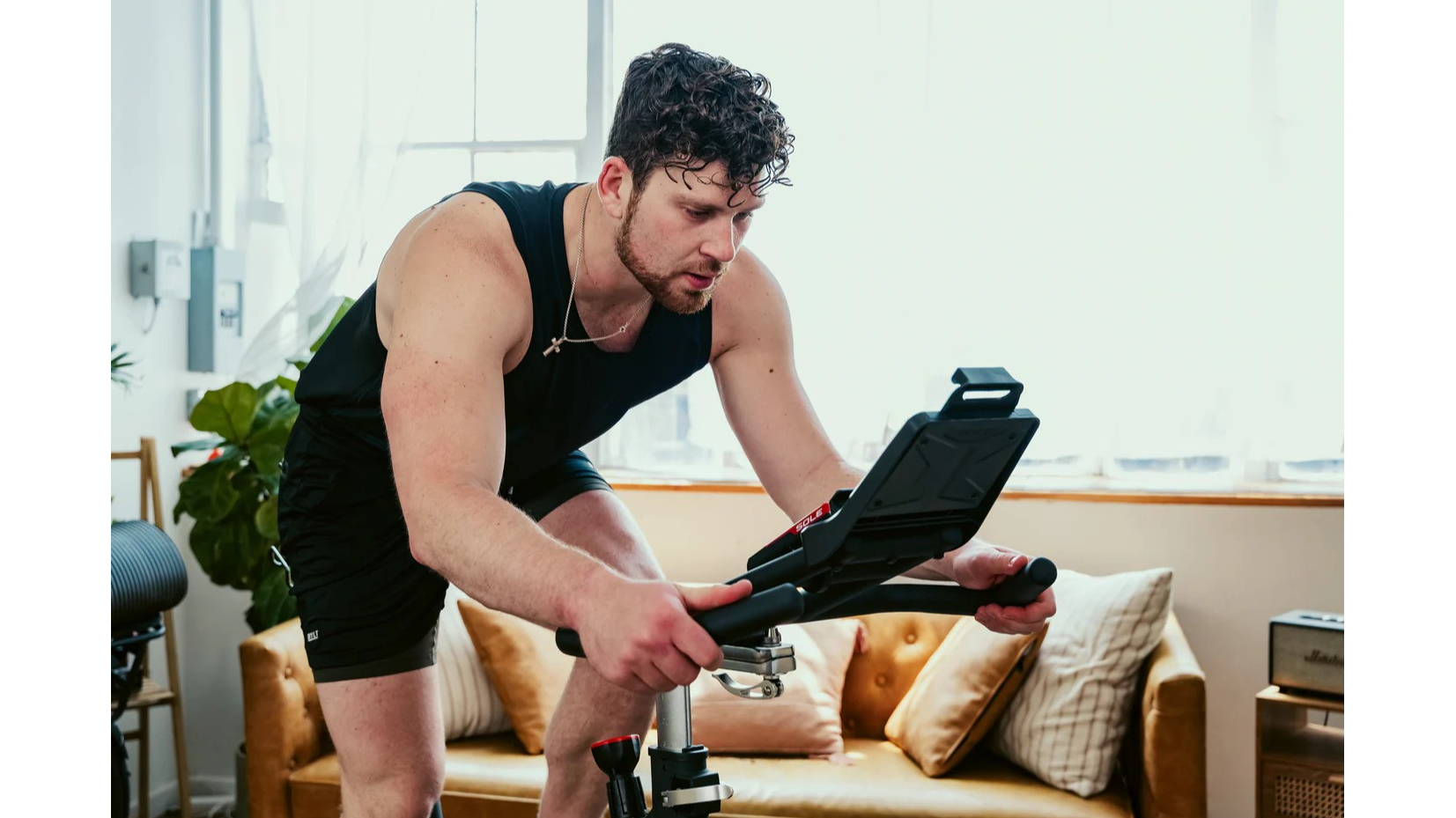
Key Takeaways
- High-resistance interval training on stationary bikes creates muscle-building adaptations in the quadriceps, hamstrings, and glutes that closely mirror traditional weightlifting through progressive overload principles.
- HIIT protocols effectively recruit both fast-twitch and slow-twitch muscle fibers, significantly stimulating protein synthesis that contributes to muscle repair and growth.
- Standing position cycling and proper form positioning dramatically increase glute and hamstring activation while targeting both fast-twitch and slow-twitch muscle fibers.
- Magnetic resistance systems with heavy flywheels provide the smooth, consistent tension needed for progressive overload and muscle-building protocols.
- Three specialized workout protocols (power intervals, progressive hill climbs, and sprint-strength hybrids) maximize muscle recruitment through varying intensity patterns.
The fitness industry has long perpetuated the myth that stationary bikes are purely cardio machines. However, emerging research reveals that high-resistance interval training on quality stationary bikes can produce muscle-building results that rival traditional weight training, particularly for lower body development.
Why Stationary Bikes Build Serious Muscle
Stationary bikes turn into muscle-building machines when resistance increases to levels that force significant power output from the legs. Clinical studies demonstrate that pedaling against heavy resistance creates muscle adaptations in the quadriceps and hamstrings that closely mirror the effects of traditional weightlifting. The constant nature of pedaling means muscles experience extended time under tension; a critical factor for hypertrophy.
The body’s largest muscle groups engage during high-resistance cycling: quadriceps drive the downstroke, hamstrings power the upstroke, glutes stabilize and generate power, and calves provide fine motor control throughout the pedal stroke. Research shows that HIIT protocols effectively recruit both fast-twitch and slow-twitch muscle fibers, significantly stimulating protein synthesis that contributes to muscle repair and growth.
Studies demonstrate remarkable results when comparing high-intensity cycling protocols to traditional resistance training. HIIT-based muscle building significantly elevates protein synthesis, with this elevated synthesis window lasting well beyond the workout period.
High-Resistance Power Intervals
1. Setup and Form Positioning
Proper bike setup creates the foundation for muscle activation. Position the seat height so the knee maintains a 25-30 degree bend at the bottom of the pedal stroke; this angle maximizes quadriceps engagement while protecting the knee joint. The handlebars should allow for a slight forward lean that engages the core without compromising spinal alignment.
Foot positioning matters significantly for power transfer. The ball of the foot should rest over the pedal axle, with toes pointing straight ahead. This positioning allows for optimal force application throughout the entire pedal stroke while engaging the calf muscles as stabilizers.
2. 25-Minute Workout Structure
This power-focused protocol begins with a 5-minute progressive warm-up, gradually increasing resistance from light to moderate. The core workout consists of 8 power intervals: 30 seconds of maximum effort at heavy resistance followed by 90 seconds of active recovery at lighter resistance.
During power phases, maintain 50-60 RPM with resistance that simulates climbing a steep hill. Setting resistance high enough to keep pedal revolutions below 60 per minute optimizes muscle growth by emphasizing strength over speed. Rise out of the saddle for the final 10 seconds of each interval to maximize glute and hamstring recruitment. Complete the session with a 5-minute progressive cool-down.
3. Critical Form Cues for Maximum Activation
Core engagement throughout the workout prevents energy leakage and increases overall muscle activation. Initiate the downstroke by driving the knees forward rather than simply pushing down; this technique fully activates the quadriceps and creates a more powerful pedal stroke.
Incorporating standing positions or “hovering” (maintaining position slightly above the seat) during intervals shifts more load to the quadriceps and dramatically increases activation of glutes, calves, and ankles. Maintain a neutral spine position during standing intervals to prevent lower back strain while maximizing muscle recruitment.
Progressive Hill Climb Challenge
1. Building Continuous Tension
Progressive hill climbs maintain continuous muscle tension while systematically increasing the challenge. This approach creates metabolic stress and mechanical tension: two key drivers of muscle hypertrophy. Unlike interval training, hill climbs build muscular endurance alongside strength, creating well-rounded lower body development.
The continuous nature of hill climbs forces muscles to work in an oxygen-depleted environment, triggering adaptations that increase both strength and endurance capacity. This sustained effort pattern closely mimics the demands of activities like hiking or stair climbing while providing controlled progression.
2. 30-Minute Progressive Protocol
Begin this workout at approximately 40% of maximum sustainable resistance after a 5-minute warm-up. Every 3 minutes, increase resistance by 10-15%, creating five distinct climbing stages over 20 minutes. Each stage should feel progressively more challenging, with the final two increases resembling the difficulty of heavy squat repetitions.
Cadence naturally decreases to 50-65 RPM as resistance increases. This slower rhythm with higher force output optimizes muscle fiber recruitment for strength development. Include 15-30 second standing intervals during each stage to engage different muscle groups and prevent adaptation plateau. Finish with a 5-minute cool-down to promote recovery.
Sprint-Strength Hybrid Training
1. Targeting Fast and Slow-Twitch Fibers
The sprint-strength hybrid protocol strategically targets both fast-twitch and slow-twitch muscle fibers through contrasting training stimuli. Fast-twitch fibers respond to explosive, high-speed movements with moderate resistance, while slow-twitch fibers adapt to sustained, high-resistance efforts at lower speeds.
This dual-stimulus approach creates superior muscle development compared to single-modality training. Fast-twitch fiber recruitment during sprint phases improves power output and muscle size, while slow-twitch engagement during strength segments builds endurance and metabolic capacity.
2. 20-Minute Dual-Stimulus Workout
Following a 5-minute warm-up, alternate between two distinct training zones throughout 5 complete cycles. Sprint phases involve 30 seconds at moderate resistance (40% maximum) with cadence exceeding 100 RPM to maximize fast-twitch fiber recruitment and power development.
Strength segments require 90 seconds at heavy resistance (70-80% maximum) with controlled cadence of 50-60 RPM. This combination stimulates both explosive power and sustained strength, creating wide-ranging muscle adaptations. The contrasting demands prevent neural adaptation while maximizing overall muscle fiber recruitment patterns.
Equipment Features for Muscle Building
1. Magnetic Resistance Systems
Magnetic resistance systems provide smooth, silent, and consistent tension needed for progressive overload protocols. Unlike friction-based systems that can vary in resistance due to wear or environmental factors, magnetic systems maintain precise control throughout the entire pedal stroke.
This consistency allows for accurate progression tracking and ensures that muscles experience the intended stimulus during each workout. The smooth resistance curve prevents jarring transitions that could disrupt form or reduce muscle activation efficiency.
2. Heavy Flywheel Benefits
Heavier flywheels tend to provide smoother, more consistent rides and better stability during standing intervals. The momentum created by a substantial flywheel eliminates dead spots in the pedal stroke, ensuring continuous muscle engagement throughout the entire revolution.
This consistent loading pattern closely mimics outdoor cycling dynamics while providing the stability needed for high-resistance training protocols. Heavy flywheels also reduce the choppy feel common in lighter bikes, allowing for better form maintenance during intense intervals.
3. Standing Position Capability
The ability to safely transition to standing positions dramatically expands muscle-building potential. Standing cycling activates different muscle recruitment patterns, particularly increasing glute and hamstring engagement while challenging core stability and balance.
Quality bikes designed for standing work feature sturdy frames that prevent wobbling or flexing during intense efforts. Proper handlebar positioning and pedal design support safe transitions between seated and standing positions without compromising workout flow or safety.
Progressive Overload Principles for Cycling
1. Resistance Progression Guidelines
Progressive overload involves systematically increasing training demands to stimulate continuous adaptation. For cycling, this means gradually increasing resistance levels over time while maintaining proper form and target RPM ranges. Begin with resistance that allows for the completion of prescribed intervals with moderate challenge.
Increase resistance by 5-10% weekly once current levels become manageable. This gradual progression prevents plateaus while reducing injury risk. Track resistance levels, duration, and perceived exertion to monitor progress and ensure consistent advancement toward muscle-building goals.
2. RPM Targets for Muscle Growth
Different RPM ranges serve specific muscle-building purposes. For strength development, maintain 50-65 RPM with high resistance to maximize force output per pedal stroke. Power development benefits from 70-85 RPM with moderate-high resistance, while explosive power requires 90+ RPM with moderate resistance.
Varying RPM targets throughout training phases prevents adaptation and addresses different aspects of muscle development. Lower RPMs with higher resistance emphasize strength qualities, while higher RPMs develop power and neural efficiency.
3. Workout Frequency and Recovery
Muscle growth occurs during recovery periods, not during workouts themselves. Perform high-intensity muscle-building protocols 3-4 times weekly with minimum 48-hour intervals between sessions. This frequency balances training stimulus with adequate recovery time for protein synthesis and muscle repair.
Active recovery days can include light cycling or other low-intensity activities that promote blood flow without adding significant training stress. Monitor performance metrics and subjective fatigue levels to adjust frequency as needed for optimal results.
Indoor Cycling Bikes Support Muscle-Building Protocols
The best indoor cycling bikes provide the features required for effective muscle-building protocols. Magnetic resistance systems deliver smooth, consistent tension throughout each pedal stroke, while heavy flywheels ensure stability during standing intervals and high-resistance efforts.
Look for sturdy steel construction capable of handling intense training demands without wobbling or flexing. Adjustable positioning allows for proper setup regardless of user height, ensuring optimal muscle activation and injury prevention. Ideally, your bike of choice should support the progressive overload principles needed for continued muscle development.
SOLE Fitness
56 Exchange Pl.
Salt Lake City
UT
84111
United States