

Houston, Texas Jun 24, 2026 (Issuewire.com) 21st Century Quality Home Care, a Texas HCSSA-licensed Personal Assistance Services agency serving Fort Bend, Harris, Montgomery, Brazoria, Waller, Galveston, and Anderson counties, today announced the launch of what may be the most comprehensive human-plus-technology senior care model ever offered by an independent non-medical home care agency in the state of Texas.
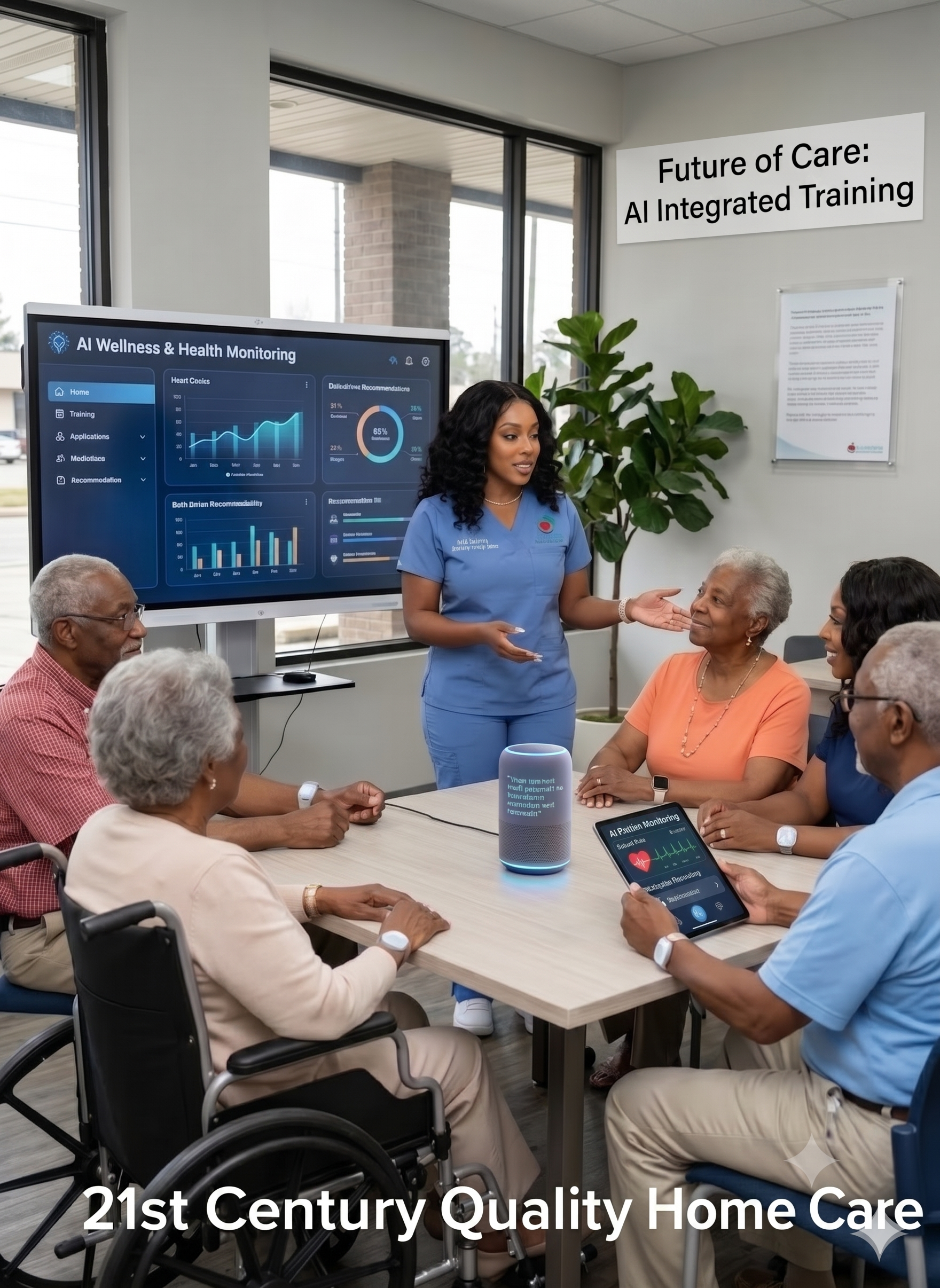
The initiative brings together certified Home Health Aides and an array of AI-powered technologies to deliver personalized, real-time, insight-driven care that keeps clients safer, happier, healthier, and at home longer at a cost that makes advanced senior care accessible to more families than ever before.
“We are not replacing our caregivers with robots. We are building something the home care industry has never seen before a model where our certified Human Home Health Aides are backed by technology so powerful it can monitor a loved one around the clock, detect a fall the moment it happens, send an immediate alert to the family, remind a senior to take their medication, stimulate their mind, track their sleep, and give a family member in another state real-time peace of mind all while keeping that loved one in the home they love, surrounded by the people who care about them most. This is the AI revolution in home care and it is happening right here in Fort Bend County,” said Tieasha Waddy, Administrator and Executive Director of 21st Century Quality Home Care.
THE HUMAN HEART OF 21st Century QHC
Technology does not and will never replace the human caregiver at 21st Century Quality Home Care. Certified Home Health Aides provide the personal care the bathing, the dressing, the meal preparation, the safe transfers, and the companionship that makes a person feel seen and dignified in their own home. No artificial intelligence replicates that.
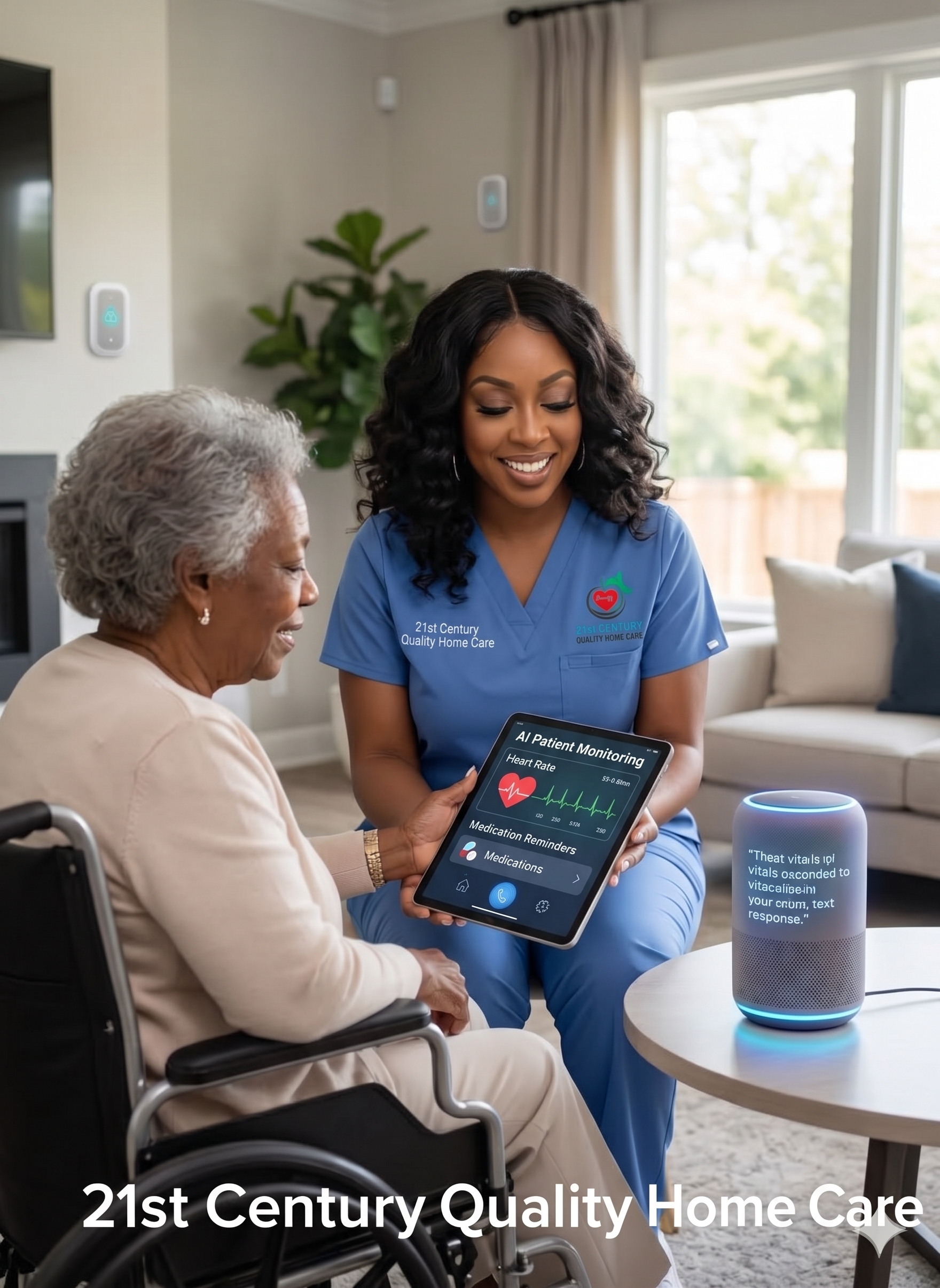
What AI does is fill the hours between caregiver visits. It watches. It listens. It reminds. It alerts. It learns what is normal for each individual client and flags the moment something is not. The result is a circle of care that is always complete human when human is needed, intelligent when intelligence is needed, and always present.
AI COMPANION ELLIQ: THE LOVED ONE IS NEVER ALONE
Loneliness is a silent health crisis among seniors one that accelerates cognitive decline, worsens depression, and drives preventable hospitalizations. 21st Century QHC is deploying ElliQ, the AI-powered companion developed by Intuition Robotics, into client homes.
According to data published by the New York State Office for the Aging from an 800-person statewide deployment, ElliQ achieved a 95% reduction in loneliness among participants. Users engaged an average of more than 30 times per day, six days a week with 75% of interactions focused on improving social, physical, and mental well-being. ElliQ initiates daily conversation, reminds clients to take medications, facilitates video calls with family, and sends real-time behavioral alerts to the 21CQHC care team when patterns change. No technology experience is required.
TOUCHLESS FALL DETECTION VAYYAR CARE: ALWAYS ON
Falls are the leading cause of injury-related hospitalization among seniors. One in five seniors refuse to wear a traditional fall detection pendant. One in three forget to put it on. 21st Century QHC has eliminated this problem entirely.
Vayyar Care’s wall-mounted 4D imaging radar sensors detect falls the moment they happen without any wearable, camera, or button. The sensor sees through clothing, in complete darkness, and through bathroom steam. It monitors bedrooms, living rooms, and bathrooms, detecting not only hard falls but slow slides and gentle floor contacts that wearables miss entirely. According to Vayyar’s published performance data, the system delivers four times more accuracy than other automatic fall alert systems, with over 95% of alerts confirmed as genuine falls. Caregivers and family members receive an immediate alert the moment a fall is detected.
BRAIN HEALTH TECHNOLOGY VR COGNITIVE THERAPY: MEDICARE COVERED
In January 2025, the Centers for Medicare and Medicaid Services activated Medicare Part B reimbursement for virtual reality systems that deliver Cognitive Behavioral Therapy. Eligible clients may receive a VR headset loaded with clinically designed cognitive therapy programs shipped directly to the home, covered by Medicare Part B.
21st Century QHC caregivers guide clients through memory exercises, cognitive stimulation programs, and stress reduction experiences during every visit. For 21st Century QHC’s Medicare GUIDE dementia clients served through a partnership with Vespire Medical Care this brain health technology is a clinical priority. The GUIDE program covers comprehensive dementia care coordination and up to $2,500 per year in respite care for eligible Medicare beneficiaries.
SMART HOME SAFETY, MEDICATION MANAGEMENT, AND SLEEP MONITORING
Every 21st Century QHC client home includes Amazon Alexa Together integration, providing families with real-time activity alerts, drop-in voice communication, and immediate emergency notification. The Hero Smart Medication Dispenser automatically sorts and dispenses medications, alerting caregivers and family members immediately when a dose is missed creating a closed-loop medication safety system that dramatically reduces hospitalization risk. Non-wearable smart sleep monitors track sleep quality, restlessness, and breathing patterns nightly, alerting the care team to early signs of cognitive decline or chronic disease progression before a crisis develops.
THE COST ADVANTAGE: BETTER CARE FOR MORE FAMILIES
AI-assisted care can reduce the total paid caregiver hours a family needs. When a loved one has 24-hour fall detection, an AI companion, smart medication management, and real-time sleep monitoring in place, families can maintain the same or better level of safety with fewer paid hours than traditional care alone requires. The Human Home Health Aide focuses on what only a human can do. Technology handles the rest. The result is more comprehensive care at a cost more families can afford.
AI OPERATIONS INFRASTRUCTURE: A FIRST FOR TEXAS INDEPENDENT HOME CARE
Behind the client-facing technology, 21st Century Quality Home Care has built a 15-workflow AI operations infrastructure the first of its kind among independent home care agencies in Texas. A Reader, Planner, Doer, and Checker agent pipeline manages authorization tracking, billing verification, caregiver credential monitoring, and real-time HHSC compliance across all seven service counties simultaneously.
SERVING VETERANS, DEMENTIA PATIENTS, AND FAMILIES
21st Century Quality Home Care serves Veterans through the VA TriWest Community Care Network, referred through the Michael E. DeBakey VA Medical Center in Houston. The agency participates in the Medicare GUIDE Model for dementia care through Vespire Medical Care and serves private pay clients across all seven counties. Every client receives a certified Human Home Health Aide backed by intelligent technology that keeps them safer, more connected, and more independent than any previous generation of seniors has ever been.
About 21st Century Quality Home Care
21st Century Quality Home Care is a Texas HCSSA-licensed Personal Assistance Services agency based in Arcola, Texas, providing non-medical personal care, companion care, and respite services across Fort Bend, Harris, Montgomery, Brazoria, Waller, Galveston, and Anderson counties. 21st Century QHC is a VA TriWest Community Care Network provider, a Medicare GUIDE Partner Organization through Vespire Medical Care, and a licensed HCSSA provider in good standing with the Texas Health and Human Services Commission. The agency is currently accepting new clients and caregiver applications.

Media Contact
21st Century Quality Home Care
(832) 308-0776
503 Rosen Ave
Source :21st Century Quality Home Care
This article was originally published by IssueWire. Read the original article here.


