
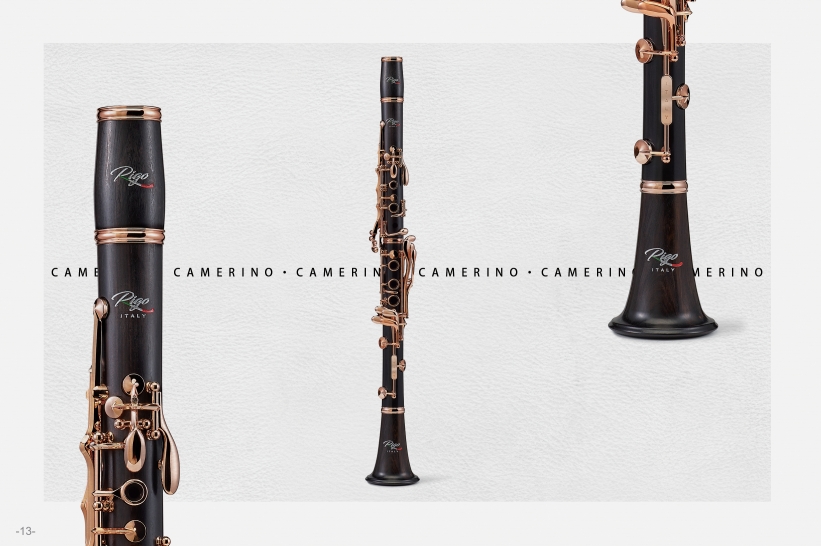
Milano, Italy – September 08, 2026 – Flagship instruments carry a particular burden. They are expected not merely to perform well, but to define what a maker believes a clarinet should be—and then to prove it, night after night, in the hands of players who notice everything. A flagship cannot hide behind marketing, because the musicians who play it have spent entire careers learning to hear past marketing. The Rigo Camerino, the artist-grade grenadilla clarinet at the summit of the Rigo range, was built to carry exactly that burden.

Wood Worthy of the Name
An artist instrument begins long before any key is fitted. The Camerino’s grenadilla body wood passes through a rigorous multi-stage selection process in which density, grain structure, and acoustic behavior are all evaluated, and only a small fraction of candidate material is approved for production. This selectivity is invisible in a showroom photograph, but it is audible in the first phrase: a depth and evenness of resonance that only properly chosen wood can provide.
Selection is only the beginning. Wood destined for a Camerino is then worked with the patience a flagship deserves, with each stage of machining and finishing held to tolerances that leave no room for approximation. The goal is not simply a beautiful body, but a stable one—a tube of air, bounded by wood, that will behave identically in a dry winter hall and a humid summer festival tent.
One Maker, One Instrument
Most clarinets, even expensive ones, are assembled along production lines where responsibility for any single instrument is distributed across many hands. The Camerino follows a different discipline, one the workshop describes as “one maker, one instrument”: each clarinet is entrusted to a single master technician—drawn from the most experienced craftspeople in the Rigo facility—who oversees every precision component of that instrument from bore work through key fitting and final regulation.
The practical effect is accountability of the most old-fashioned kind. When one craftsman owns an instrument end to end, nothing is passed along, and nothing is overlooked. Key heights, spring tensions, pad seating, and the countless micro-adjustments that separate a good clarinet from a great one are all executed by the same expert hands, to the same uncompromising standard. The instrument that reaches its case is not a unit from a batch; it is one person’s finished work.
Performance at the Summit
The specifications that matter in a flagship cannot be captured on a spec sheet; they reveal themselves under pressure. The Camerino’s key action is precise, smooth, and perfectly balanced, with a mechanism that disappears beneath fast technical work. Intonation is remarkably stable—not just at mezzo-forte in the staff, but across every register and at every dynamic, including the exposed pianissimo entries where lesser instruments drift.
The tonal signature is purity with presence. Register transitions are seamless enough that wide-interval writing—the kind that exposes every seam in an instrument’s scale—feels natural and unforced. The altissimo speaks with focus and security even at soft dynamics, a quality that soloists and principal players will immediately recognize as the difference between managing a register and trusting it.
Dynamic range is where the Camerino most clearly separates itself. At full volume the sound stays centered and colored rather than turning hard; at the softest dynamics the tone retains its core and carries to the back of the hall. The instrument gives a player a wide palette of color to work with, and then gets out of the way. Put simply, the Camerino holds what players call the purest sound through the widest demands—and it does so as a matter of design, not of luck.
Consistency, Instrument After Instrument
Professional players shopping at the flagship level know a quiet truth about handmade instruments: individual examples vary, sometimes dramatically. The Camerino’s combination of ruthless wood selection and single-maker assembly is aimed squarely at that problem. Because the same disciplined process produces every instrument, the character of the model is a constant rather than a lottery—an instrument auditioned in one city can be ordered with confidence in another. For a teacher recommending an instrument to a student about to invest at the professional level, that predictability is worth as much as any single feature.
The Audition Test
Flagship instruments are ultimately judged in the first ten minutes of a trial. Players consistently describe the same sequence with the Camerino: the first long tone reveals the wood; the first fast passage reveals the mechanism; the first pianissimo in the upper register reveals the voicing. Passing all three tests in a single sitting is what separates a contender from a flagship—and it is the experience the Camerino is built to deliver every time it comes out of the case.
The Rose Gold Signature
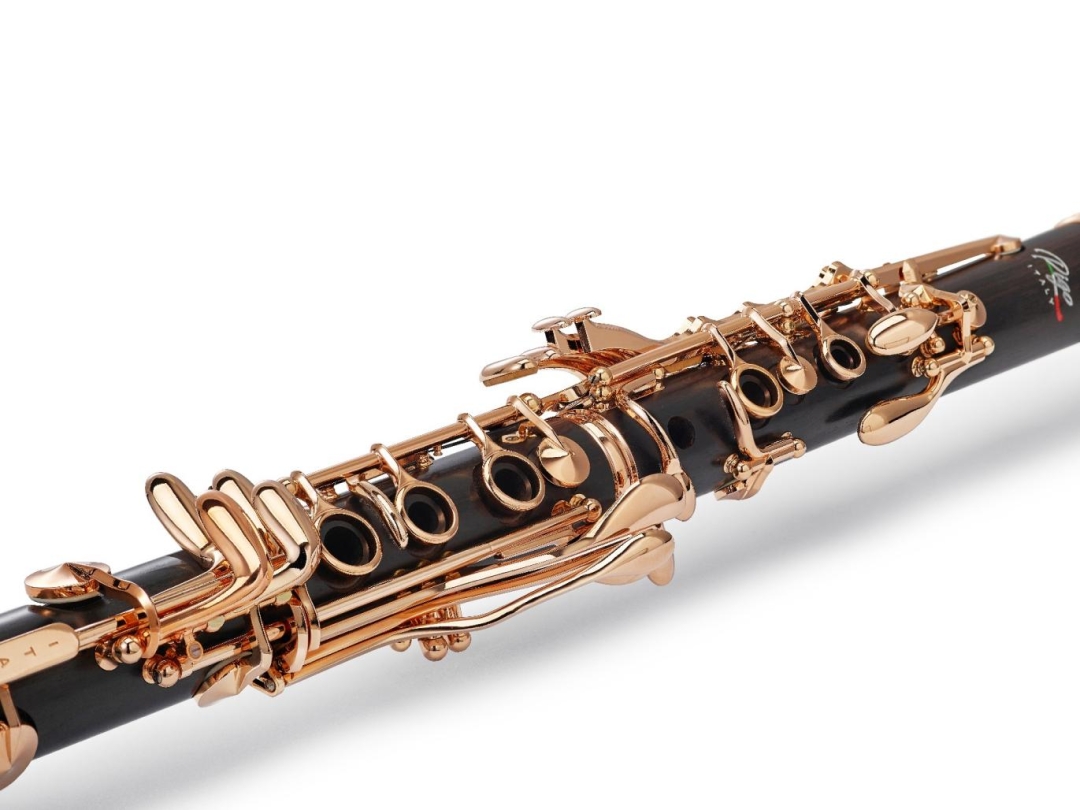
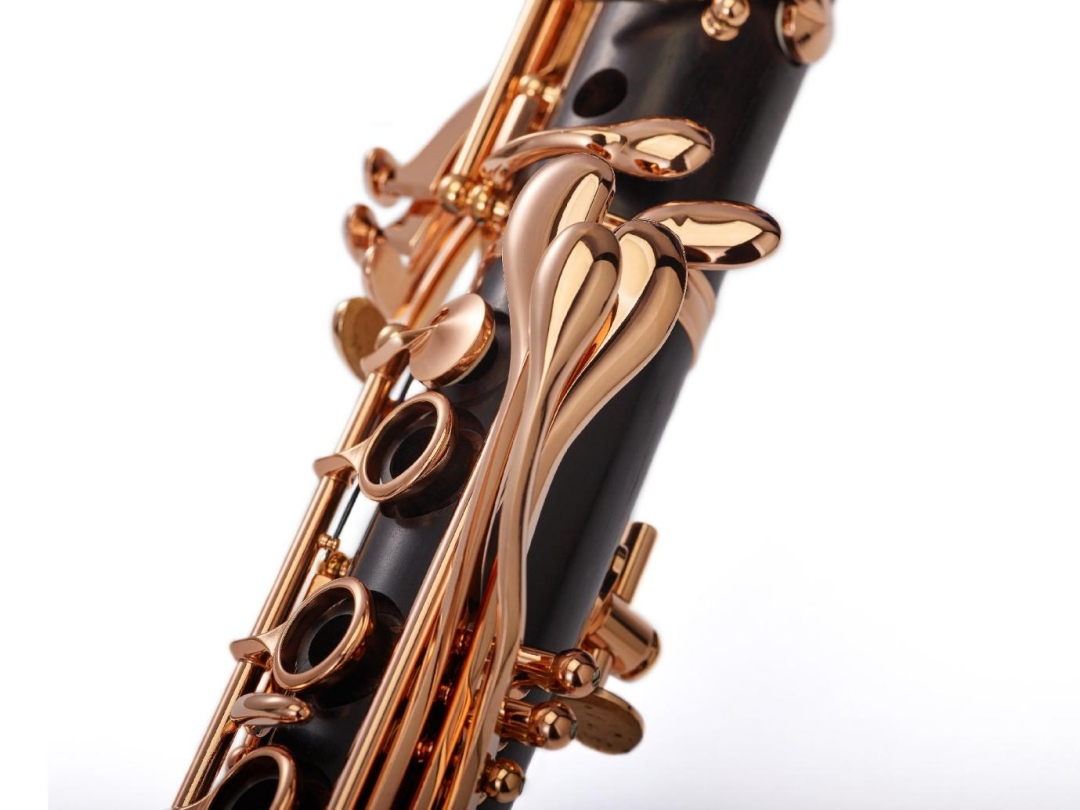
An instrument built to this standard earns the right to look the part. The Camerino is finished with full rose gold plating across its keywork—a warm, unmistakable visual signature that sets it apart on any stage. Beyond the aesthetics, the finish reflects the philosophy of the whole instrument: nothing standard, nothing borrowed, nothing left unconsidered.
Details at this level are never merely decorative. The plating protects the mechanism through years of handling, and the keywork beneath it is regulated to standards built to hold their adjustment through the rigors of touring. A Camerino is meant to look exceptional on the day it is unboxed—and to keep that standard long after.
Who the Camerino Is For
• Professional orchestral musicians who need absolute reliability under pressure
• Soloists and recitalists seeking a distinctive, singing voice
• Top conservatory students preparing for professional auditions
• Players searching for a genuine lifetime instrument
The Bottom Line
The Camerino does not ask to be compared feature by feature with the established flagships of the clarinet world; it asks to be played. For musicians who measure an instrument by what happens between intention and sound, one trial is usually enough to understand what “one maker, one instrument” really delivers. In a market where flagship prices climb every year, the Camerino makes its case the old way: pick it up, play it, and let the instrument do the talking.
About Rigo
Rigo is an Italian clarinet brand dedicated to crafting high-quality instruments, accessories, and woodwind care products for clarinet players worldwide. Rooted in woodwind craftsmanship tradition, the brand blends time-honored techniques with contemporary innovation to deliver exceptional performance tools. Rigo’s mission is to empower clarinetists of all levels to achieve their best sound through thoughtfully designed, reliable products that elevate every playing experience.
Media Contact
Company Name: RIGO GLOBAL INSTRUMENTS S.R.L.
Contact Person: Giuseppe Rigo
Email: Send Email
State: Milano
Country: Italy
Website: www.rigoclarinets.com


